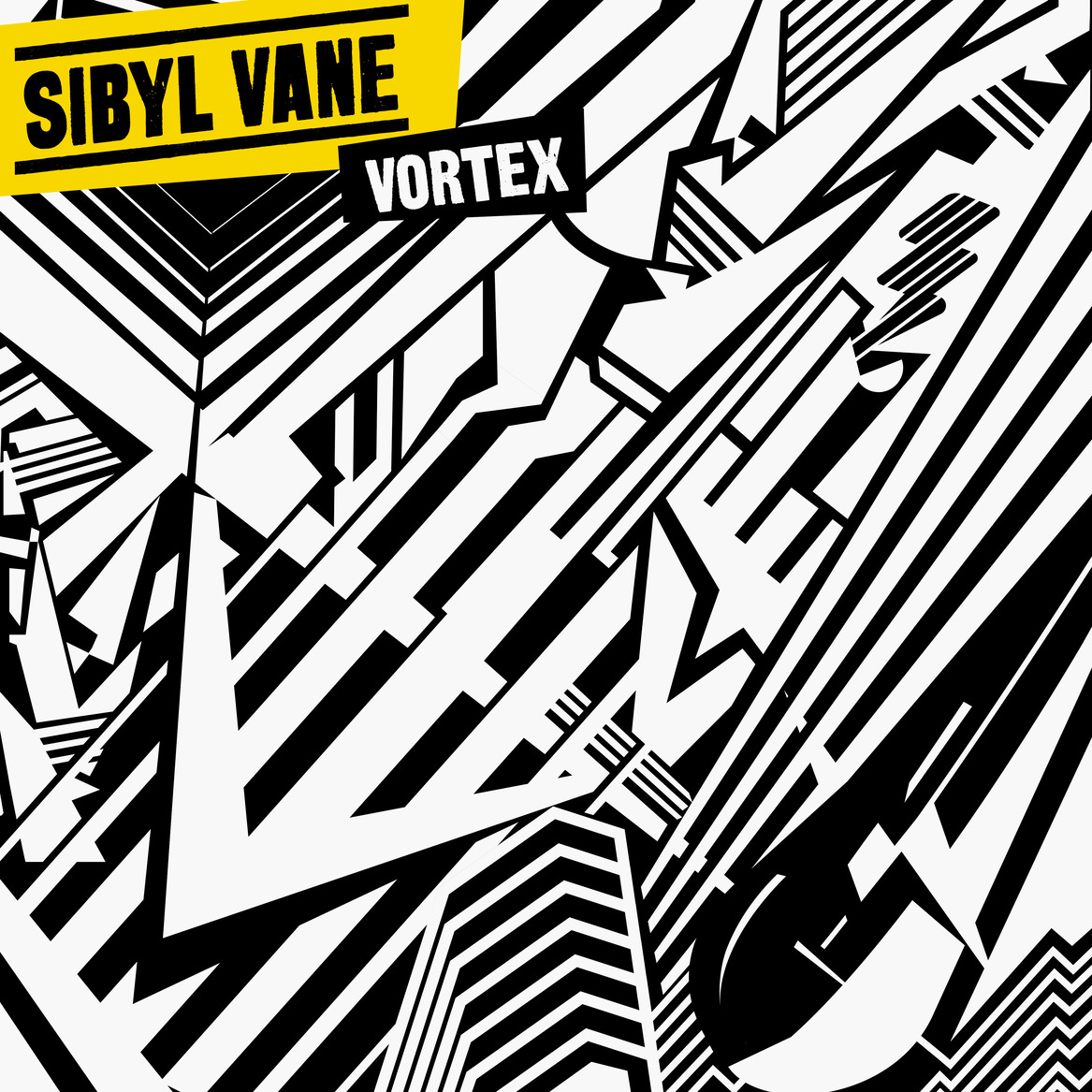
Sibyl Vane is an Estonian rock/ post punk band that I have been following for years. I got pinged by Heiko Leesment (Bass guitar and manager of the band) and started working with great pleasure on the review. This new album marks a new chapter in the band’s line-up — for the first time, drummer Kristo Otter, who joined the group in 2022, appears on a full-length Sibyl Vane album. The new line-up gave the band the opportunity to consciously rethink their sound and move into directions they previously may not have had the courage or reason to explore. I add more info underneath:
“With this line-up, it became easier to let things naturally evolve where they wanted to go,” says Helena Randlaht, adding that emotionally, VORTEX feels like the band’s most honest album so far.
Sonically, VORTEX is more diverse than any of Sibyl Vane’s previous releases. Alongside the band’s familiar guitar-driven sound, the album introduces bolder synthesizer’s and electronic textures, created in collaboration with Mattias Tirmaste and Tarvi Kull. A particularly important role in the album’s sonic identity is played by the 1980s electronic autoharp Suzuki Omnichord, which shaped the character of several songs featured on VORTEX.
VORTEX is built around the idea that the modern world is full of invisible, consuming spirals, online environments, relationships and fears that pull people in and prevent them from moving forward. Often these vortices take the form of aggressive discussions that seem endless and never lead anywhere meaningful. The album is about finding ways not to become trapped in such spirals, but to move through them or avoid them altogether. Some of the vortices described on the album are deeply personal, while others are broader and societal, such as suffocating social media bubbles that promise meaningful dialogue or solutions, yet only drag people deeper into dead ends.
At the heart of the new studio album lies the collaboration between Sibyl Vane’s two creative driving forces — Helena Randlaht and Heiko Leesment. According to both musicians, VORTEX is above all a creative dialogue rather than a compromise. It is precisely this dialogue that has shaped the sonic and thematic backbone of the album.
“One of the central ideas behind this album is definitely that I’m no longer hiding,” says Sibyl Vane’s singing guitarist and co-author Helena Randlaht. “VORTEX allowed me to speak about things I may not previously have dared — or even wanted — to talk about.”
The band’s bassist and manager Heiko Leesment adds: “For us, this isn’t simply a collection of songs. It has been a long and thorough process where many emotions have found their musical form. Our creative tandem works in a way where one of us brings in the initial spark or raw material, and from there we begin building the whole together. Helena has always created the lyrics and vocal parts. Over time, my role has become shaping those ideas and our shared additions into a complete whole, but also helping guide how we make artistic decisions and move forward as a band.”
VORTEX was recorded between 2024 and 2025 in various locations across Estonia. The album was engineered by Siim Mäesalu, while the mastering was completed in Finland by Henkka Niemistö. Vocal arrangements were overseen by singer Haldi Välimäe, under whose direction the vocal recording and production process also took place.
Unlike the band’s previous work, the new material is distinctly more vocal-driven. This time, Sibyl Vane approached the recording process from the opposite direction — instead of building songs on top of an instrumental foundation, as is common in rock music, the main focus became Helena’s voice, its nuances, and emotional depth.
“Usually, rock songs are built around the rhythm section, while vocals are treated as something added near the end of the process. We decided to break away from those conventions and instead began by asking what Helena’s voice wanted to say and how it could sound at its absolute best within each song,” explains Leesment, adding that both Helena Randlaht and Haldi Välimäe spent weeks in the studio shaping the vocal arrangements.
Now that you have all the info needed I can start with the actual album review underneath:
Into The Sun starts with nice guitar sound and drums. When Helena’s voice jumps in she sounds pretty sweet, sometimes singing high notes, sometimes just on a talking note. Sometimes there are even double layers on the vocals (e.g. you hear her twice). Compared to the previous albums this song sounds more like a post punk song. Whilst when you listen to Circuits of Desire you get the more regular sound crafted by Sibyl Vane. It’s indeed true that Helena’s voice is more leading the song, more than ever before. Another thing noticed are the double layers and the less vibrato in her vocals. Where Does Love Come From sounds as sweet as the title. It’s due to that as the softest song on the album with a bit of a dream pop touch.
Vortex takes us back into a retro post punk vibe, with a little bit of vibrato in Helena’s voice. The mid-section of the song has a sexy sound. A nice one. The band returns a sweeter sound with Can’t Keep It Together. A bit of dreampop mixed with a bit of new wave. I like the dreamy guitar sound and the beats of the drums. With She’s A Gun we arrive at my most favorite track of the album as the song has a great tempo, love the global sound and especially the guitar sound. It’s clear that this song fit’s Helena’s voice the best.
KIDM has a nice bas and lead guitar sound, elevating the song to a higher level. Cat Zarathustra’s Space Odyssey has a good sound, but needs a bit more spins before actually being able to write a few lines about it as the song directly makes you dive into the sound and thus making you to forget about the reviewing part. The song also has a good swing. The poppy sounds and a clap your hands moment (listen to the drums before the chaotic high). This song has to be an end song of a gig, at least that’s how I feel it. The price of second best song goes to Little Less Lonely. The song rocks a bit more than the predecessors. Her vocals have something erotic, for sure combined with the lyrics and when you listen to it with headphones on. I also like the melancholic side of the song.
The last song is called Personality. It’s also the most personal song on the album (hence the name of the song), it’s also a short one. It’s some kind of soft new wave song with a sweet touch in the vocals.
The album is not going out with a blow, but with personality and that is what the album is about: putting the vocals first and then working around them. The last song describes the album the best. It’s different from other bands, it’s something fresh and has also on top enough variation in the songs: tempo, vibe, genre, … Helena is clearly surrounded by talented people and together they lift the band to a higher level and keep on refreshing their sound.
ALBUM PRESENTATIONS:
30.05 - Riga - Strops Jugla
2.07 - Vana-Vigala - Läburint 2026
18.07 - Kõima - Kuurebaste festival 2026
24.07 - Kuremaa - Jõgeva Treff 2026